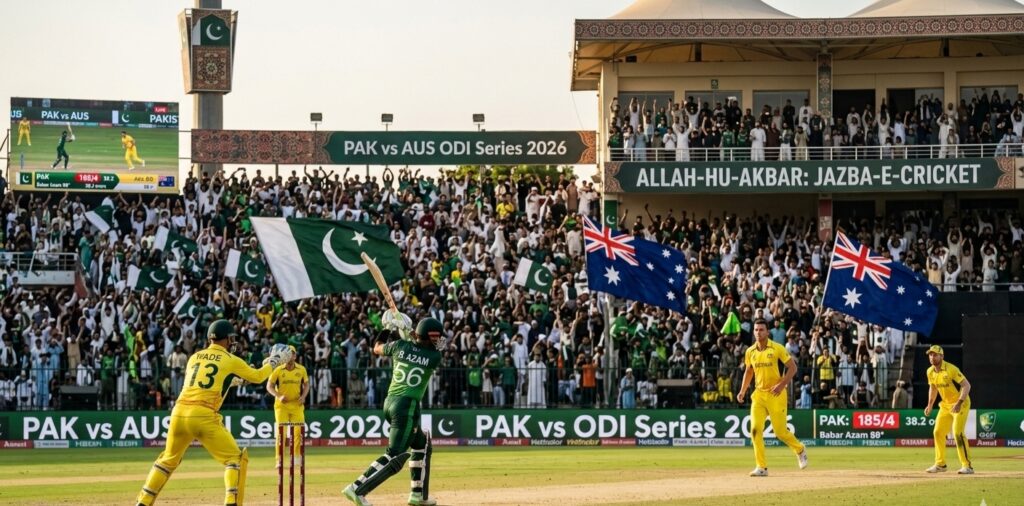
The Ultimate Clash: Pakistan vs Australia ODI Series 2026 – Comprehensive Preview, Live Match Analysis, and Team Dynamics
1. Introduction: A Historic Cricketing Rivalry Renewed
When it comes to international cricket, few matchups carry the historical depth, raw passion, and contrasting styles of play as a battle between Pakistan and Australia. One is a cricketing powerhouse defined by structural discipline, clinical execution, and an unrelenting winning mentality. The other is a mercurial, unpredictable force capable of conquering the world on their day or collapsing spectacularly on another—driven by individual genius, emotional momentum, and a legendary production line of world-class fast bowlers.
In May and June of 2026, these two giants collide once again on Pakistani soil for a highly anticipated three-match One Day International (ODI) series. This series is not merely a bilateral event; it represents a crucial testing ground for both nations as they fine-tune their tactical approaches, experiment with bench strength, and attempt to build structural momentum ahead of future global ICC tournaments.
For Pakistan, playing at home brings immense local support but also unparalleled pressure. The passionate local fans demand excellence, particularly following recent transitions in Pakistan’s red-ball setups. For Australia, touring the subcontinent is always the ultimate test of adaptability—navigating low-bounce or spinning pitches, dealing with the intense summer heat, and facing a hostile yet appreciative crowd. This comprehensive 2,000-word analysis delves deep into the team contexts, squad selections, critical match-ups, venue guides, and tactical live-match scenarios of the upcoming series.
2. Context of the 2026 Home Series for Pakistan
The timing of this three-match ODI series is critical for the Pakistan Cricket Board (PCB) and the national selection committee. Coming off a highly intense domestic and international season, the atmosphere surrounding the national white-ball team is filled with anticipation. In Pakistan, cricket is more than a sport; it is a national obsession, and performances are scrutinized under a microscope by media and fans alike.
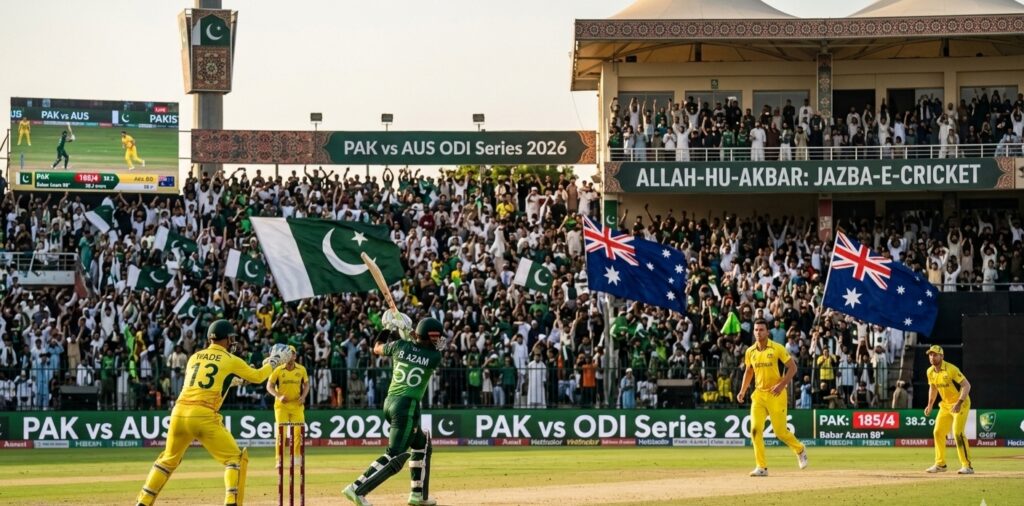
The Selection Matrix and High-Profile Recalls
To stabilize the squad, the national selectors have announced a heavily altered 16-member squad for this assignment. The squad selection reflects a modern balancing act between rewarding domestic performers and relying on proven international stars to handle the pressure of facing Australia.
The biggest talking point leading into the first match is the phenomenal form of batting mainstay Babar Azam. His presence provides a psychological anchor to a team searching for structural identity in the middle overs. Babar’s world-class ODI record makes him the prize wicket for the visiting Australian bowling attack.
Conversely, the team has introduced several young faces to manage transition periods. The exclusion or resting of certain veterans signals a desire to inject youth into the side, especially in the wicketkeeping and lower-middle-order explosive batting departments.
Overcoming Injury and Form Slumps
Pakistan’s preparation for this series has also been tested by fitness concerns. Several explosive opening batsmen and young pace sensations have had their workloads managed tightly due to minor injuries aggravated during the domestic franchise season.
In their absence, the squad leans heavily on a mix of established veterans playing alongside relatively fresh talents such as Ahmed Daniyal, Arafat Minhas, and Rohail Nazir. This sets up an intriguing dynamic of veteran superstars guiding absolute rookies through high-pressure international match situations.
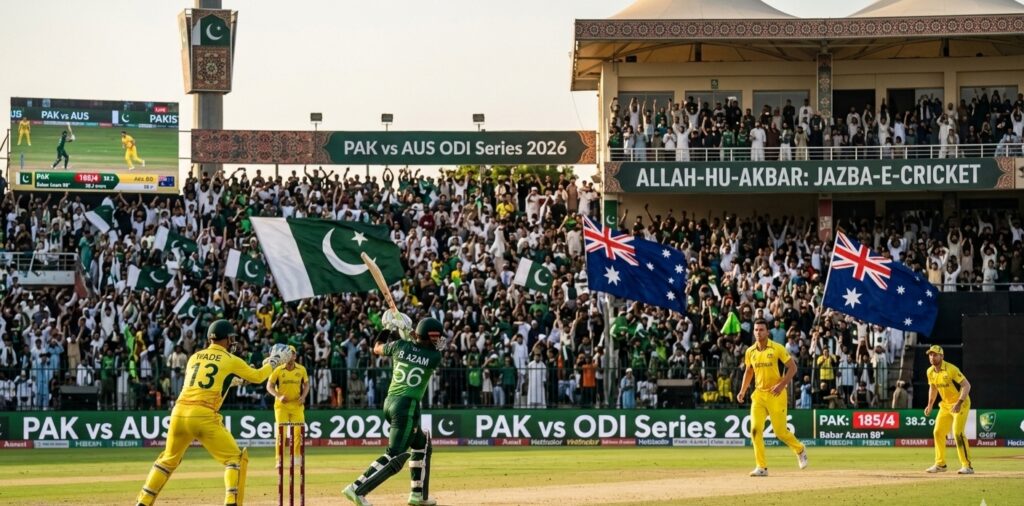
3. Team Analysis: Pakistan Squad Strengths and Weaknesses
+------------------------------------------------------------------------+
|                      PAKISTAN 16-MEMBER ODI SQUAD                      |
+------------------------------------------------------------------------+
| Shaheen Shah Afridi (c)  | Salman Ali Agha (vc)   | Babar Azam         |
| Haris Rauf               | Naseem Shah            | Shadab Khan        |
| Abrar Ahmed              | Sufyan Moqim           | Abdul Samad        |
| Sahibzada Farhan         | Shamyl Hussain         | Maaz Sadaqat       |
| Ahmed Daniyal            | Arafat Minhas          | Rohail Nazir (wk)  |
| M. Ghazi Ghori (wk)      |                        |                    |
+------------------------------------------------------------------------+
Strengths
- The Return of Frontline Superstars: The presence of Babar Azam gives Pakistan world-class stability at number three. Furthermore, having a fully fit pace spearhead in Naseem Shah and premier all-rounder Shadab Khan injects massive experience back into the playing XI.
- A Lethal Pace Dynamic: Led by Shaheen Shah Afridi, the pace trio of Shaheen, Naseem Shah, and the sheer raw velocity of Haris Rauf remains a terrifying prospect for any batting lineup in world cricket, particularly under lights when the ball begins to reverse swing.
- Recent T20I Domination Over Australia: Earlier in February 2026, Pakistan hosted Australia for a three-match T20I series and executed a stunning 3-0 clean sweep, culminating in a massive 111-run victory in Lahore. Players like vice-captain Salman Ali Agha (who was named Player of the Series) carry significant psychological confidence into this longer format.
Weaknesses
- Inexperienced Wicketkeeping Unit: With recent shuffles in the squad, the gloves fall to younger prospects. Facing world-class Australian fast bowling or keeping to complex spinners on wearing pitches will be a massive trial by fire for the selected keeper.
- Fragile Opening Combinations: The absence of long-term opening stability means that the top order will have to adapt quickly. If early wickets fall against the new ball, it puts immense, repetitive pressure on the middle order.
- Management and Tactical Transitions: Adapting to modern, high-strike-rate ODI templates requires a shift in mindset. Sometimes, Pakistan’s conservative approach in the middle overs allows opposition spinners to dictate terms.
4. Team Analysis: The Australian Challenge
The visiting Australian contingent lands in Pakistan with a massive point to prove. Having suffered a demoralizing 3-0 defeat in the T20I leg earlier this year under a stand-in leadership structure, the world champions are eager to re-establish their dominance in the 50-over format—a format they historically manage with cold, clinical precision.
Strengths
- Tactical Blueprint and Structural Discipline: Australia rarely panics. Their approach to ODI cricket is built on aggressive, data-driven match-ups, exceptional athletic fielding, and a batting template that emphasizes hard running between wickets coupled with calculated power-hitting.
- World-Class Spin Options: In subcontinent conditions, having a premier leg-spinner like Adam Zampa is a priceless asset. Zampa’s ability to control the middle overs, choke the run rate, and pick up crucial wickets makes him Australia’s most vital defensive and offensive weapon.
- Elite All-Round Depth: With individuals like Cameron Green, Marcus Stoinis, and Mitchell Marsh, the team possesses immense balance. These players allow Australia to bat deep down to number eight or nine while offering the captain multiple medium-pace bowling options to alter the rhythm of the game.
Weaknesses
- Subcontinent Adaptability Quirks: While senior members are highly experienced due to global league exposures, the younger fringe players in the squad occasionally struggle to read the subtle variations of reverse swing and mystery spin traditional to Pakistani venues.
- Fatigue and Climate Factors: Playing an intense international schedule across formats means that maintaining peak physical conditioning in the intense heat of Rawalpindi and Lahore will be a significant challenge for the Australian fast-bowling department.
5. Venue Guide: Pitch Conditions and Environmental Factors
The three-match ODI series is strategically split across two iconic cricketing venues in Pakistan: the Rawalpindi Cricket Stadium and the Gaddafi Stadium in Lahore. Each venue possesses distinct characteristics that heavily dictate team selections, toss decisions, and tactical approaches.
Rawalpindi Cricket Stadium (1st ODI – May 30, 2026)
Historically known as a batsman’s paradise, the track at Rawalpindi offers true bounce, minimal lateral movement after the first few overs, and a lightning-fast outfield.
- The Toss Factor: Teams winning the toss usually elect to bowl first if there is early morning moisture, but in afternoon starts (4:30 PM local time), captains prefer putting runs on the board. The pitch stays true, but chasing under lights can become tricky if the humidity rises, causing the ball to skid or grip unpredictably.
- Expectation: High-scoring thriller. Scores of 300+ are considered par at this venue, meaning bowlers must rely heavily on variations, slower balls, and pinpoint yorkers to survive.
Gaddafi Stadium, Lahore (2nd & 3rd ODIs – June 2 & June 4, 2026)
The Gaddafi Stadium offers a more balanced contest between bat and ball. While it starts as an excellent batting surface, it tends to slow down significantly as the match progresses.
- The Spin Factor: As the game enters the second innings, spinners find substantial purchase, with the ball gripping into the surface. This is where bowlers like Abrar Ahmed, Sufyan Moqim, and Australia’s Adam Zampa will become match-winners.
- Reverse Swing: The dry nature of the square in Lahore often scuffs up the white kookaburra ball quickly, allowing master exponents of reverse swing like Shaheen Afridi and Haris Rauf to become lethal in the death overs.
6. Key Tactical Battles to Watch
An international cricket match is essentially a collection of micro-battles. Whichever team wins these individual tactical duels usually emerges victorious at the end of the 100 overs.
+------------------------------------------------------------------------+
|                         KEY TACTICAL MATCH-UPS                         |
+------------------------------------------------------------------------+
| 1. Shaheen Shah Afridi (PAK)     vs.  Travis Head / Mitchell Marsh(AUS)|
| 2. Babar Azam (PAK)              vs.  Adam Zampa (AUS)                 |
| 3. Glenn Maxwell / Stoinis (AUS) vs.  Shadab Khan / Sufyan Moqim (PAK) |
+------------------------------------------------------------------------+
I. Shaheen Shah Afridi vs. Australian Openers
The opening over of a Pakistan match is a global event. Shaheen Shah Afridi’s ability to bowl fast, late-swinging yorkers to left-handers is legendary. If Travis Head or Mitchell Marsh fail to counter Shaheen’s initial spell, Australia’s middle order will be exposed to a brand-new ball against Naseem Shah. Australia will likely adopt an aggressive counter-attacking strategy to throw Shaheen off his length early on.
II. Babar Azam vs. Adam Zampa
This is a chess match of the highest order. Babar Azam is a master technician against spin, using his nimble footwork to manipulate fields and rotate strike. Adam Zampa, on the other hand, excels at bowling a flatter, quicker trajectory that traps batsmen who attempt to play him off the back foot. How Babar manages Zampa during the critical 11-to-40 over block will dictate Pakistan’s total.
III. The Battle of the Lower-Middle Orders
In modern ODI cricket, the final 10 overs decide the momentum. Australia boasts incredible explosive power through Marcus Stoinis and Cameron Green. Pakistan will counter this with the raw pace of Haris Rauf and the mystery spin variations of Sufyan Moqim. Whichever lower-middle order capitalizes on the death overs will give their side a massive psychological edge.
7. Live Match Analysis: Scenario Modeling and Strategic Breakdowns
To truly understand how this live match unfolds, we must break down the strategic responsibilities across the three distinct phases of a One Day International.
+--------------------------------------------------------------------+
|                      50-OVER MATCH TIMELINE                        |
+--------------------------------------------------------------------+
|  Overs 1-10: Powerplay   --> Early Swing & Aggressive Boundaries    |
|  Overs 11-40: Middle     --> Spin Consolidation & Strike Rotation  |
|  Overs 41-50: Death Overs--> Power-Hitting vs. Yorkers & Variations|
+--------------------------------------------------------------------+
Phase 1: The Powerplay (Overs 1 – 10)
- Pakistan’s Approach: With an altered opening pair, Pakistan’s primary objective will be survival and consolidation. They cannot afford to lose three wickets in the first ten overs. Top-order batsmen will look to play the anchor role, while their partner tries to utilize the field restrictions.
- Australia’s Approach: Australia will look to exploit any lack of regular top-order stability by bowling a strict, probing line just outside off-stump, testing the batsmen’s patience. When batting, Australia will look to maximize the powerplay, targeting the straight boundaries.
Phase 2: The Middle-Overs Consolidation (Overs 11 – 40)
- The Tactical Choke: This phase belongs to the captains and their spin departments. Salman Ali Agha, acting as vice-captain and primary spin-allrounder alongside Shadab Khan, must keep the field spread out and prevent the Australian batsmen from manipulating singles at will.
- Babar’s Anchor Strategy: For Pakistan, this phase will revolve around Babar Azam. If Babar can bat through this period at a strike rate of 85-90, it allows explosive players lower down the order to play with absolute freedom later in the innings.
Phase 3: The Death Overs Exploded (Overs 41 – 50)
- Bowling Execution: Haris Rauf’s role becomes monumental here. His ability to bowl speeds north of 145 kph combined with deceptive slower balls is what Pakistan relies on to restrict opposition teams.
- Batting Chaos: For Pakistan, young players like Abdul Samad and Arafat Minhas will need to clear their front legs and target the shorter boundaries, ensuring that the platform built by the top order is converted into a match-winning score.
8. Statistical Deep-Dive: Historical ODI Head-to-Head
To contextualize the intensity of this series, one must look at the historical data. Australia and Pakistan have shared an incredibly competitive relationship in 50-over cricket, stretching across decades of World Cups and bilateral tours.
| Metric | Pakistan | Australia |
|---|---|---|
| Total Matches Played | 108 | 108 |
| Matches Won | 34 | 70 |
| No Result / Tied | 3 | 1 |
| Highest Score | 349/4 (Lahore) | 369/7 (Adelaide) |
| Lowest Score | 108 (Sydney) | 120 (Hobart) |
| While historical numbers heavily favor Australia due to their dominant runs in the late 1990s and 2000s, the gap has closed drastically in recent years, especially when matches are played in the Asian subcontinent. Pakistan’s ability to maximize reverse swing and deploy mystery spinners has often neutralized Australia’s traditional pace advantage. |
9. Broadcasters, Live Streaming, and Fan Engagement
The Pakistan Cricket Board has pulled out all the stops to ensure that this high-profile series reaches a global audience. Recognizing the shifting trends in how modern sports fans consume content, several accessibility initiatives have been introduced.
- Live Streaming via Digital OTT Platforms: In a landmark move, official Over-The-Top (OTT) platforms will live-stream the entire Pakistan vs Australia ODI series. This allows fans both domestically and globally to access high-definition coverage, multi-camera angles, and real-time statistics directly via their mobile devices or smart televisions.
- Affordable Ticket Pricing: To ensure packed stadiums and a vibrant home atmosphere, physical and online ticket prices have been set at highly affordable rates, starting from just PKR 200. Tickets are accessible across multiple express centers in Lahore, Rawalpindi, and Islamabad, encouraging families and young fans to witness live international cricket action.
10. Conclusion: The Verdict and Series Predictions
This Pakistan vs. Australia ODI series is poised to be an absolute classic. It features two teams operating at different spectrums of their development—Australia, structured, professionally driven, and seeking redemption for their earlier 3-0 T20I losses; Pakistan, mercurial, dealing with transitional updates, yet immensely dangerous in their home conditions with the return of their talismanic batsman Babar Azam.
If Pakistan’s top-order partnership can withstand the initial Australian fast-bowling onslaught and their bowling unit maintains its discipline during the death overs, the hosts have a phenomenal chance of securing a famous series win. However, if Australia’s elite all-round depth and the tactical brilliance of Adam Zampa dismantle Pakistan’s middle order, the visitors will look to assert their status as the kings of the 50-over format.
One thing is absolute: when these two teams step out onto the fields of Rawalpindi and Lahore, cricket fans worldwide are guaranteed a spectacle of the highest quality, filled with passion, drama, and world-class skill. Let the games begin!