
The story of Muhammad bin Qasim is not just a tale of military conquest; it is the chronicle of a young visionary who bridged two civilizations. Below is a detailed account of his life, his journey to the Indus, and his lasting legacy.The Conqueror of Sindh: The Saga of Muhammad bin QasimThe Dawn of a Young LeaderMuhammad bin Qasim Al-Thaqafi was born around 695 AD in the city of Taif, in modern-day Saudi Arabia. His father, Qasim bin Yusuf, passed away when Muhammad was still a child, leaving his upbringing to his mother and his powerful paternal uncle, Hajjaj bin Yusuf, the Governor of Iraq.Even as a teenager, Muhammad displayed an intellect that far outpaced his peers. Under Hajjaj’s tutelage, he was trained in both the art of governance and the science of warfare. At the age of 15, he was already leading successful military expeditions in Persia (Iran), earning a reputation for his strategic brilliance and calm temperament under pressure.The Catalyst for WarThe history of South Asia changed because of a single act of piracy. In the early 8th century, the King of Sarandip (modern-day Sri Lanka) sent eight ships filled with gifts, orphaned Muslim girls, and pilgrims as a gesture of goodwill to the Umayyad Caliphate.As the ships neared the coast of Debal (near modern-day Karachi), they were attacked and looted by sea pirates. The women and children were taken captive. When word reached Hajjaj bin Yusuf, he sent a letter to Raja Dahir, the powerful ruler of Sindh, demanding the release of the captives and the punishment of the pirates. Dahir’s dismissive reply—claiming he had no control over the pirates—provided the casus belli for one of the most significant expeditions in Islamic history.The Campaign of Sindh (712 AD)In 711 AD, Hajjaj appointed the 17-year-old Muhammad bin Qasim to lead an army of 6,000 elite Syrian cavalrymen toward the Indus. This was not merely a mission of revenge; it was a sophisticated military operation.The Siege of Debal: Muhammad bin Qasim arrived at the port of Debal with heavy siege engines, including a massive catapult named “Al-Aroos” (The Bride). The city was protected by high walls and a sacred red flag flying atop a great temple. Muhammad realized that the flag served as a symbol of morale. He directed his catapults to strike the flagstaff. When the flag fell, the defenders panicked, and the city was captured.The Battle of Rawar: After capturing several key cities like Nerun and Sehwan, the final showdown occurred at Rawar. Raja Dahir met the Muslim army with a massive force, including war elephants that looked like moving fortresses. However, Muhammad used fire-arrows to scare the elephants, causing them to retreat into their own ranks. Raja Dahir was killed in the heat of the battle, marking the end of his dynasty.Governance Beyond the SwordWhat set Muhammad bin Qasim apart from other conquerors was his policy of tolerance. He did not force conversions. Instead, he treated the local Hindus and Buddhists as “Dhimmis” (protected citizens).He allowed the locals to rebuild their temples and maintain their traditions. He even appointed local Brahmins to high-ranking administrative positions, recognizing their experience in local governance. The common people of Sindh, who had been marginalized under the previous caste-based hierarchy, saw him not as an invader, but as a liberator. It is said that when he eventually left a city, the local population would weep in grief.A Tragic EndThe glory of Muhammad bin Qasim was short-lived. A shift in power occurred in Damascus; Caliph Walid I died and was succeeded by Sulaiman bin Abdul Malik. Sulaiman held a deep personal grudge against Hajjaj bin Yusuf (who had recently passed away) and targeted all of Hajjaj’s relatives.Muhammad bin Qasim, at the height of his success, was summoned back in chains. Despite having a loyal army that would have fought for him, he chose the path of discipline and surrendered to the Caliph’s messengers. He was taken to Iraq, where he was imprisoned and tortured to death at the young age of 20.The Quality of His Character: JusticeIf one had to define Muhammad bin Qasim with a single quality, it would be Insaaf (Justice).His military genius brought him to Sindh, but his justice allowed him to stay in the hearts of the people. He proved that true leadership is not about the length of one’s life, but the depth of one’s impact. By establishing the “Bab-ul-Islam” (The Gateway of Islam), he laid the foundation for a spiritual and cultural transformation in the Indian subcontinent that lasts to this day.High-Quality Cinematic Image Description”A breathtaking cinematic 8K shot of Muhammad bin Qasim, a 17-year-old general with a sharp, determined gaze. He is wearing silver-trimmed white robes and light leather armor, standing atop a cliff overlooking the Indus River. The golden sun reflects off his unsheathed Damascus steel sword. In the background, his disciplined cavalry is seen through a haze of desert dust, with ancient flags fluttering in the wind. The style is hyper-realistic, capturing the heat of the desert and the epic scale of history.”

Continue Reading

Here is the comprehensive article on Sultan Salahuddin Ayubi in English, maintaining the depth and structure of the previous version.

​Sultan Salahuddin Ayubi: The Great Liberator of History ​The name of Sultan Salahuddin Ayubi (known in the West as Saladin) shines in Islamic history like a star whose brilliance influenced not only Muslims but people across the globe. He was a magnificent military commander, a private ascetic, a just ruler, and the liberator of Jerusalem. […]

Continue Reading

Pakistan ke mustaqbil (Future of Pakistan) par yeh ek tafseeli article hai. Ismein economy, technology, youth, aur challenges ko cover kiya gaya hai taake aapki 1500 words ki zaroorat puri ho sake.

​The Future of Pakistan: Challenges, Opportunities, and the Path to Prosperity ​Introduction ​Pakistan, a land of diverse landscapes and resilient people, stands at a critical crossroads in the 21st century. As the world undergoes rapid geopolitical and technological shifts, the future of Pakistan remains a subject of intense debate. With a population exceeding 240 million, […]

Continue Reading

The Resilient Rollercoaster: The Past, Present, and Future of Pakistan Test Cricket

​Pakistan Test cricket is not merely a sport; it is a high-stakes drama, a cultural phenomenon, and a testament to the country’s unyielding spirit. Often described as the “most unpredictable team in world cricket,” Pakistan’s journey in the longest format of the game is a saga of immense talent, heartbreaking inconsistency, and the miraculous ability […]

Continue Reading

The Resilience and Rigidity: The Evolving Saga of Pakistan Test Cricket​The story of Pakistan Test cricket is not merely a statistical record of wins and losses; it is a sprawling epic defined by mercurial brilliance, institutional struggle, and an unbreakable spirit. Since gaining Test status in 1952, Pakistan has established itself as the “Wild Card” of the cricketing world—a team capable of surmounting the impossible one day and collapsing inexplicably the next. In the modern era, the Test team finds itself at a critical crossroads, balancing a rich legacy of reverse swing and spin mastery against the demands of a high-octane, data-driven global game.​The Golden Legacy: From Hanif to Wasim​To understand the current state of Pakistan Test cricket, one must look at the foundation. Pakistan’s entry into the long format was marked by the legendary Hanif Mohammad, the “Little Master,” whose 337 against the West Indies in 1958 remains a masterclass in endurance.​The 1980s and 90s represented the “Golden Age.” Under the charismatic leadership of Imran Khan, Pakistan became a force that feared no one. This era introduced the world to:​Reverse Swing: Developed by Sarfraz Nawaz and perfected by the “Two Wasims” (Akram and Waqar), changing the physics of fast bowling.​Leg-Spin Wizardry: Abdul Qadir revived the dying art of leg-spin, paving the way for future greats like Shane Warne.​Batting Fortresses: Players like Javed Miandad and later Inzamam-ul-Haq provided the grit needed to win away from home.​The Era of “MisYou”: Stability in Exile​The most harrowing period for Pakistan Test cricket followed the 2009 attack on the Sri Lankan team bus, which turned Pakistan into a “nomadic” side. For a decade, the team played its “home” matches in the UAE.​Surprisingly, this era became one of Pakistan’s most successful in Test cricket. Under Misbah-ul-Haq, the team developed a “fortress” in Dubai and Abu Dhabi. Alongside the prolific Younis Khan, Misbah brought a sense of calm and discipline. In 2016, Pakistan reached the No. 1 spot in the ICC Test Rankings, a feat that felt like a miracle given they hadn’t played a Test match on home soil in seven years.​The Current Landscape: Challenges and Transitions​Today, .Pakistan Test cricket is in a state of flux. The return of international cricket to Pakistan has been a massive emotional victory, but it has brought new technical challenges, specifically regarding pitch preparation.​1. The Batting Conundrum​While Babar Azam remains the centerpiece of the batting lineup, the team has struggled with consistency. The transition from the defensive stability of the Misbah era to a more modern, aggressive approach has been rocky. Young talents like Abdullah Shafique and Saud Shakeel have shown flashes of brilliance, proving that the assembly line of talent hasn’t stopped, but the ability to bat through “tough sessions” remains a work in progress.​2. The Pace Battery vs. The Flat Tracks​Pakistan’s historical strength has been its fast bowling. However, recent home series on placid tracks have neutralized the likes of Shaheen Shah Afridi and Naseem Shah. The challenge for the current management is to produce sporting wickets that offer a contest between bat and ball, allowing Pakistan’s natural skill in seam and swing to flourish.​3. The Spin Identity​With the departure of Yasir Shah, Pakistan has searched for a consistent match-winner in the spin department. The emergence of Abrar Ahmed, the “mysterious” leg-spinner, has provided hope. In Test cricket, especially in the subcontinent, a team is only as good as its specialist spinner’s ability to take 20 wickets.​The Road Ahead: Modernization and Consistency​For Pakistan to reclaim its spot among the elite—competing with the likes of Australia and India—several structural changes are necessary:​First-Class Reform: Strengthening the Quaid-e-Azam Trophy to ensure that the gap between domestic cricket and Test cricket is minimized.​Mental Resilience: Moving away from the “unpredictable” tag by fostering a culture of tactical discipline.​Fitness Standards: In the modern five-day game, physical endurance is non-negotiable.​”Pakistan cricket is at its best when it plays with freedom, but freedom without a plan is chaos. The goal is to marry that natural flair with modern tactical awareness.”​Conclusion​Pakistan Test cricket remains one of the most compelling narratives in sports. It is a team that thrives on emotion and raw talent. While the transition period has been difficult, the ingredients for success—passionate fans, world-class fast bowlers, and elegant stroke-makers—are all still there.​As the team navigates the World Test Championship cycles, the world watches with bated breath. Because in the world of Test cricket, you can never truly count Pakistan out. They are the masters of the comeback, and their journey back to the top is not a matter of “if,” but “when.”​Summary Table: Pakistan Test Cricket Icons

Continue Reading

The Resilient Rollercoaster: The Current State of Pakistan Cricket

​Pakistan cricket has always been defined by a single word: unpredictability. As we move through 2026, the landscape of the sport in the country remains a fascinating mix of raw talent, leadership shifts, and the eternal quest for consistency. ​1. The Modern Leadership Era ​Following the shake-ups of previous seasons, the Pakistan team has been […]

Continue Reading
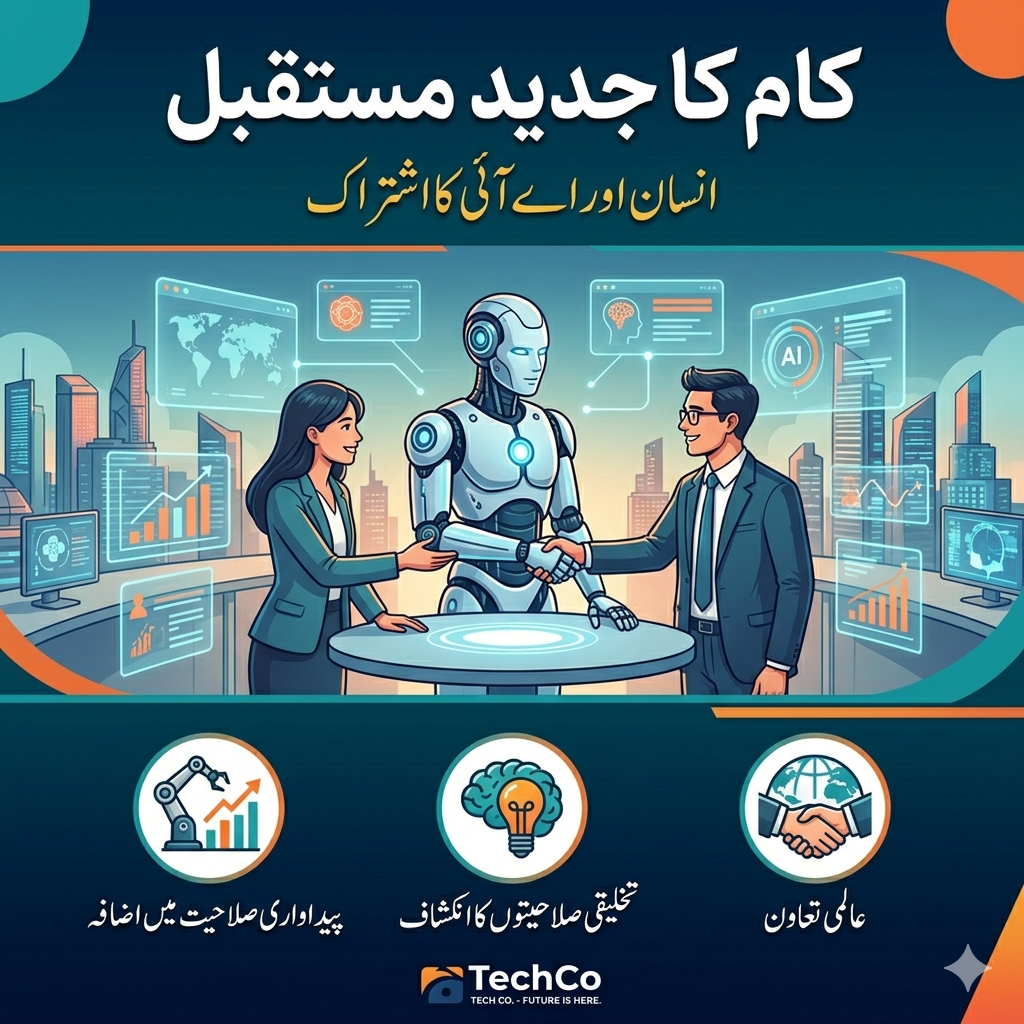
The Future of Work: How Artificial Intelligence is Redefining Human Productivity in 2026

​Introduction: The Dawn of the AI-Human Synthesis ​In the rapidly evolving landscape of the mid-2020s, the conversation around Artificial Intelligence (AI) has undergone a radical transformation. We have moved past the initial era of skepticism and the binary debate of “Man vs. Machine.” As we navigate through 2026, AI has transitioned from being a disruptive […]

Continue Reading

The Future of Web Development in 2026: Trends, Tools, and Success Strategies

​Introduction: The Evolution of the Digital Frontier As we navigate through 2026, the landscape of web development has transformed into a highly sophisticated ecosystem. What started as a platform for sharing static documents has evolved into a world of immersive, AI-driven, and lightning-fast digital experiences. For bloggers, developers, and business owners, understanding these changes is […]

Continue Reading

The AI Revolution: How Artificial Intelligence is Redefining Global Productivity in 2026

​Introduction: The New Industrial Frontier ​In the rapidly evolving digital landscape of 2026, Artificial Intelligence (AI) is no longer just a futuristic concept or a niche tool for tech enthusiasts—it is the primary engine driving the global economy. We are currently witnessing a shift more profound than the Industrial Revolution. This is the era of […]

Continue Reading

The Grand Tapestry of Pakistan Super League: A Comprehensive Analysis of the Stars Shaping PSL 2026

​The Pakistan Super League (PSL) has evolved from a nascent experimental T20 league into a global cricketing powerhouse. By 2026, it has established itself not just as a sporting event, but as the primary heartbeat of Pakistan’s sports economy. While other leagues around the world focus heavily on celebrity glamour, the PSL has carved its […]

Continue Reading