
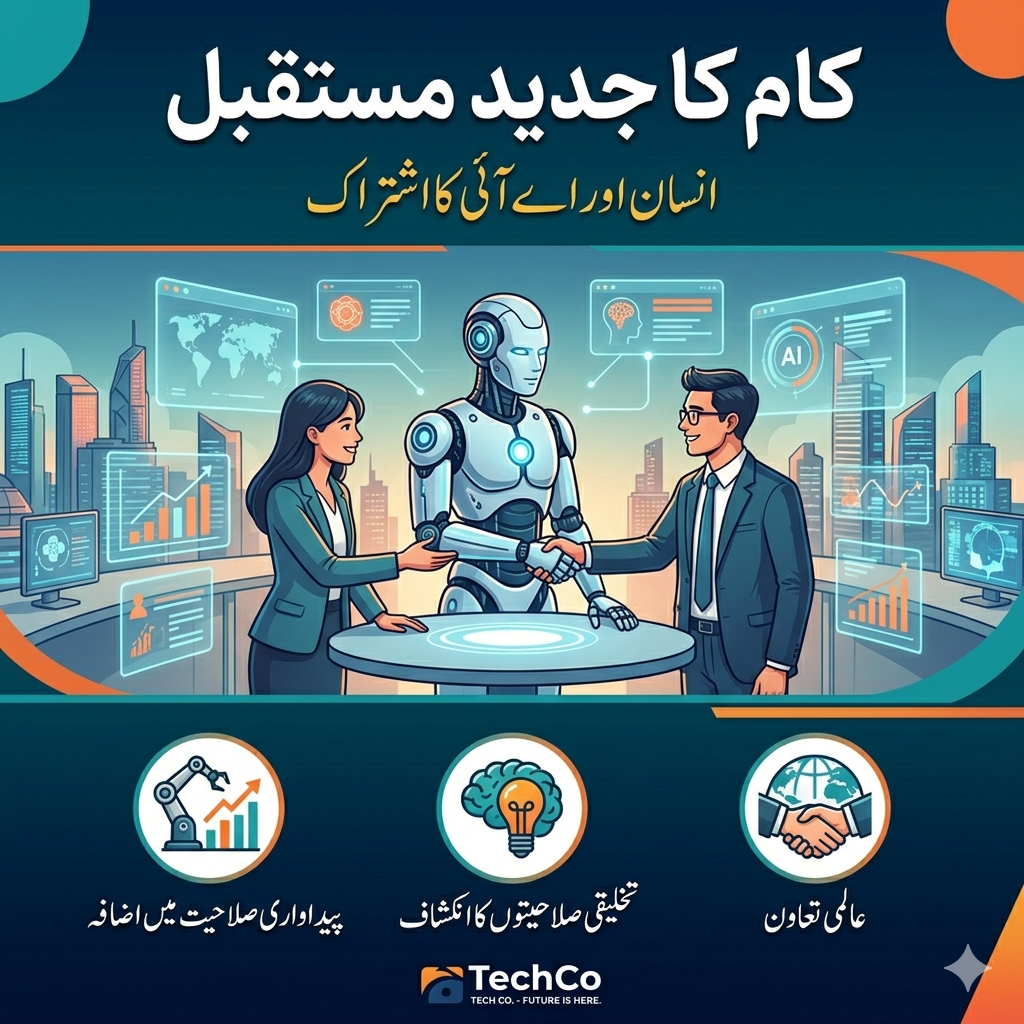
Introduction: The Dawn of the AI-Human Synthesis
In the rapidly evolving landscape of the mid-2020s, the conversation around Artificial Intelligence (AI) has undergone a radical transformation. We have moved past the initial era of skepticism and the binary debate of “Man vs. Machine.” As we navigate through 2026, AI has transitioned from being a disruptive novelty into the fundamental operating system of global productivity. This shift represents one of the most significant milestones in professional history, arguably more impactful than the Industrial Revolution or the digital boom of the late 90s.
Today, productivity is no longer measured by how many hours a human sits at a desk, but by how effectively they can orchestrate AI systems to achieve complex outcomes. This article explores the multifaceted ways AI is redefining work, the sectors seeing the most growth, the ethical boundaries we must maintain, and the psychological impact of this high-speed evolution.
1. The Paradigm Shift: From Task Automation to Cognitive Augmentation
For decades, the fear of automation was synonymous with the displacement of manual labor—robots replacing assembly line workers. However, the 2026 reality is different. We are witnessing Cognitive Augmentation. Modern AI systems are designed to enhance the brain’s “executive functions” rather than just the hands’ repetitive movements.
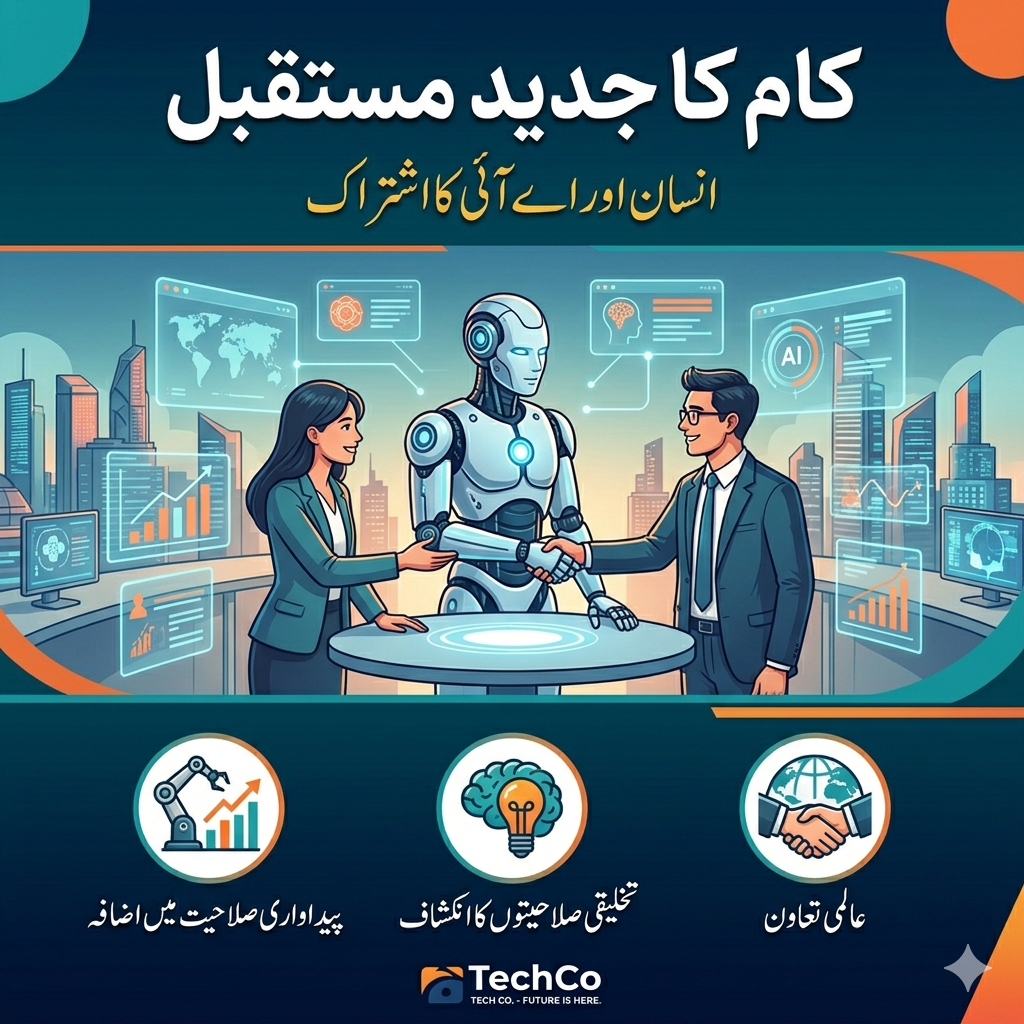
In the current professional ecosystem, AI acts as a “Co-Pilot” or a “Digital Twin.” This means that instead of losing their jobs, white-collar professionals are finding their roles “upgraded.” The AI handles the “drudgery”—data entry, basic research, scheduling, and initial drafting—leaving the human worker free to focus on high-level strategy, creative nuances, and emotional intelligence.
2. Key Drivers of AI Productivity in 2026
Several technological leaps have made this level of productivity possible:
- Hyper-Personalized LLMs: Unlike the generic chatbots of 2023, today’s AI models are fine-tuned to individual user data and company-specific protocols. They understand your “brand voice,” your past decisions, and your specific industry jargon.
- Agentic AI: We have moved from “Chat” to “Action.” AI Agents can now perform multi-step tasks autonomously—such as researching a lead, drafting a personalized proposal, and setting up a meeting—requiring only a final “thumbs up” from the human manager.
- Real-time Multimodal Integration: AI can now process text, voice, video, and live data streams simultaneously, allowing for real-time collaboration during meetings and live project updates.
3. Sector-Specific Impact: Where AI is Winning
A. Software Engineering and the “No-Code” Revolution
The tech industry was the first to see a massive productivity surge. With AI-driven pair programming, developers can now write code up to 60% faster. AI identifies security vulnerabilities in real-time and suggests optimized algorithms before a single line is deployed. Furthermore, the rise of AI has democratized software creation; business analysts can now describe a feature in plain English, and the AI generates the functional code, bridging the gap between idea and execution.
B. Healthcare: Precision and Speed
In 2026, AI is a vital partner for medical professionals. It’s not just about administrative tasks; it’s about life-saving diagnostics. By analyzing millions of medical images and genetic markers in seconds, AI helps doctors identify rare conditions with an accuracy rate that was previously impossible. This reduces the “diagnostic fatigue” doctors face, allowing them to spend more quality time with patients.
C. Education: The Death of the “One-Size-Fits-All” Model
The educational sector has been forced to evolve. AI tutors now provide personalized learning paths for every student. If a student struggles with calculus but excels in logic, the AI adjusts the curriculum in real-time. For professionals, “upskilling” has become a continuous, automated process, ensuring the workforce stays relevant as technology shifts.
D. Legal and Financial Services
The legal industry, once burdened by thousands of hours of document review, has been streamlined. AI can scan thousands of contracts to find specific clauses or legal precedents in seconds. In finance, predictive analytics allow for “Micro-Forecasting,” giving businesses the ability to adjust their budgets daily based on global market fluctuations rather than waiting for quarterly reports.
4. The Ethical Frontier: Bias, Privacy, and Oversight
With great power comes great responsibility. As AI becomes more integrated into our lives, the ethical stakes have never been higher.
- The Bias Problem: AI is only as good as the data it is trained on. If historical data contains biases, the AI will amplify them. In 2026, “AI Auditing” has become a new and essential profession, ensuring that algorithms are fair and inclusive.
- Data Privacy: As we feed more personal and corporate data into AI systems, the risk of leaks increases. The demand for “Local AI” (models that run on a private server without connecting to the open internet) is skyrocketing.
- The “Human-in-the-Loop” Necessity: No matter how advanced the AI, human oversight remains critical. Whether it’s a legal judgment or a medical diagnosis, the final accountability must rest with a human being.
5. The Psychology of Productivity: Mental Health in the AI Age
One of the most discussed topics in 2026 is the “Productivity Paradox.” While AI makes us faster, does it make us happier?
- The Risk of Burnout: When AI handles the “easy” tasks, humans are left doing only the “hard,” cognitively demanding work. This can lead to faster mental exhaustion.
- The Search for Meaning: As machines take over more roles, humans are increasingly asking, “What is my unique value?” This has led to a resurgence in the importance of soft skills—empathy, leadership, and community building.
- Work-Life Balance: Ironically, the efficiency of AI has revived the debate for a four-day workweek. If we can produce 40 hours worth of work in 20 hours with AI assistance, should we still work five days?
6. The Digital Divide: A Global Challenge
The AI revolution is not happening at the same speed everywhere. There is a growing concern about the “Digital Divide” between high-income and low-income nations. Access to high-speed internet, expensive computing power, and AI literacy is becoming the new “Wealth Gap.” For global productivity to truly flourish, the democratization of AI tools is essential to prevent a new era of technological colonialism.۔
7. How to Stay Competitive: Strategies for the 2026 Workforce
To thrive in this new era, professionals must adopt a new mindset:
- Be an Orchestrator: Stop trying to compete with AI in speed. Instead, learn to manage multiple AI tools to produce a superior result.
- Master “Prompt Engineering” and Beyond: It’s no longer just about asking the right question; it’s about understanding the logic of the model to get the best output.
- Focus on the “Human Premium”: Skills like negotiation, conflict resolution, and storytelling are things AI cannot replicate authentically. These are the skills that will get you promoted in 2026.
Conclusion: A Collaborative Future
As we look toward the end of this decade, it is clear that AI is not a replacement for human potential—it is its greatest multiplier. We are entering a “Golden Age of Productivity” where the barriers between imagination and realization are thinner than ever.
The future of work is not a dark, robotic dystopia; it is a collaborative landscape where humans provide the vision, the ethics, and the purpose, while AI provides the speed, the data, and the scale. By embracing this partnership, we are not just working faster; we are working smarter, solving bigger problems, and reclaiming our time for what truly matters.
