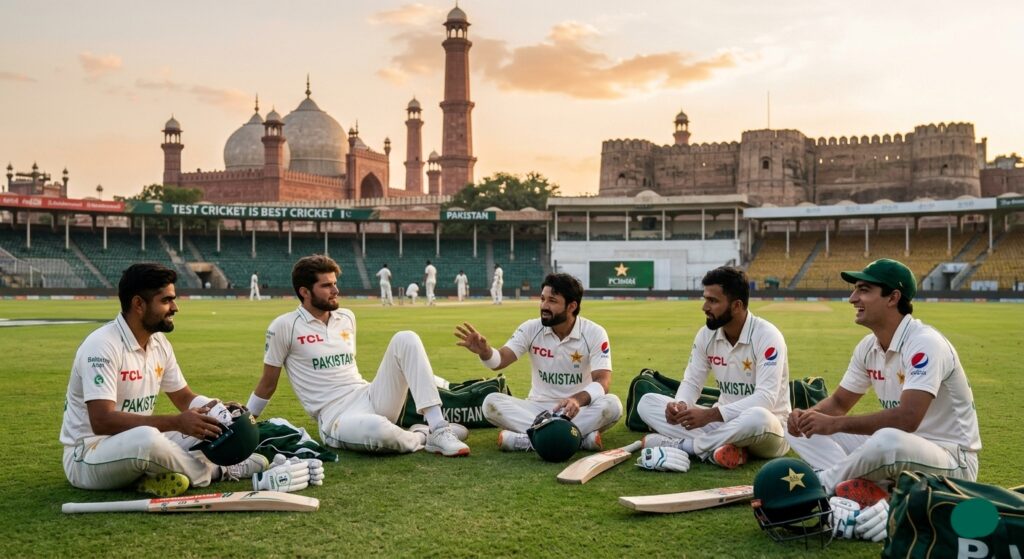
Pakistan Test cricket is not merely a sport; it is a high-stakes drama, a cultural phenomenon, and a testament to the country’s unyielding spirit. Often described as the “most unpredictable team in world cricket,” Pakistan’s journey in the longest format of the game is a saga of immense talent, heartbreaking inconsistency, and the miraculous ability to rise from the ashes.
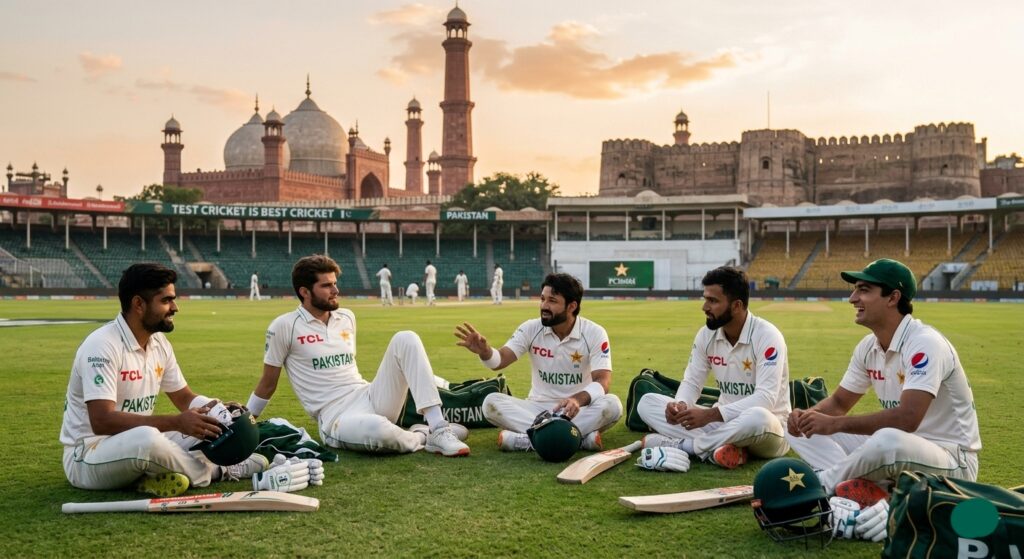
The Golden Foundations (1952–1980s)
Pakistan’s Test journey began in October 1952 against India. Under the leadership of Abdul Hafeez Kardar, the team quickly established itself as a force to be reckoned with. Unlike many new nations that took decades to find their footing, Pakistan won a Test match in their very first series.
The 1970s and 80s saw the emergence of world-class icons. Imran Khan transformed the team into a professional, aggressive unit. Alongside masters like Javed Miandad, the “Little Master” Hanif Mohammad, and the wizardry of Zaheer Abbas, Pakistan became a side that could win anywhere in the world. This era was defined by the birth of “Reverse Swing,” a craft perfected by Sarfaraz Nawaz and later inherited by the legendary duo of Wasim Akram and Waqar Younis.
The Era of the “Two Ws” and Mastery (1990s)
The 1990s were perhaps the most aesthetic era for Pakistan Test cricket. Wasim and Waqar redefined fast bowling, making the old ball more dangerous than the new one. With Mushtaq Ahmed and later Saqlain Mushtaq (the inventor of the Doosra) providing world-class spin, Pakistan’s bowling attack was arguably the best in history.
However, this decade also introduced the “mercurial” tag. The team could collapse for double digits one day and defend a tiny total the next. Internal captaincy battles and off-field controversies began to simmer, yet the raw talent on the field remained undeniable.
The Darkest Hour and the “Home” in Exile (2009–2019)
The year 2009 remains a scar on Pakistan cricket history. Following the tragic attack on the Sri Lankan team bus in Lahore, international cricket in Pakistan came to a grinding halt. For over a decade, Pakistan was forced to play its “home” matches in the United Arab Emirates (UAE).
Many predicted the death of Pakistan Test cricket. Instead, under the calm and visionary leadership of Misbah-ul-Haq, Pakistan turned the UAE into a fortress.
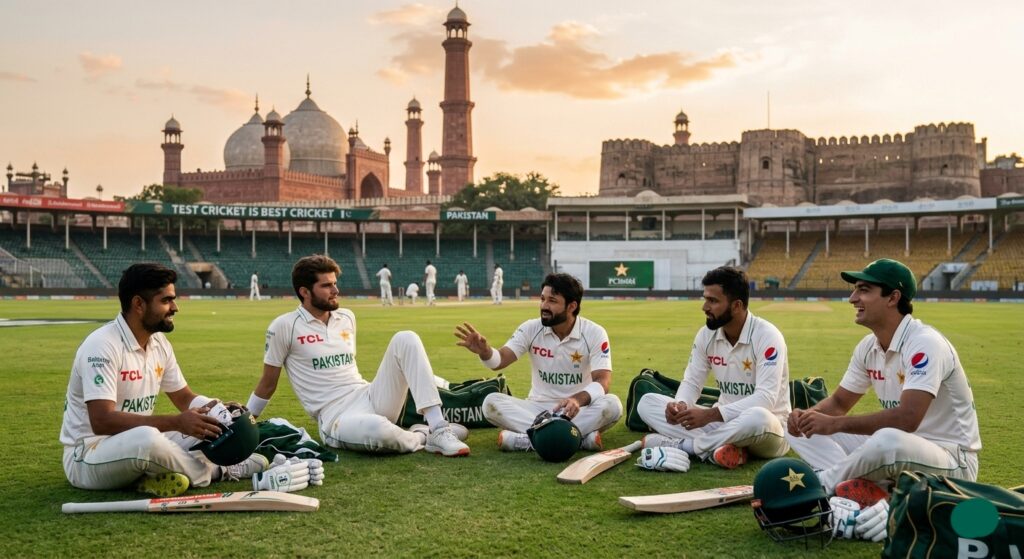
- The Misbah-Younis Era: The batting duo of Misbah and Younis Khan provided a backbone of stability.
- World No. 1: In 2016, Pakistan reached the pinnacle, becoming the No. 1 ranked Test team in the world. It was a poetic achievement for a team that couldn’t even play in front of its own fans.
The Current Landscape: Challenges and Transitions
As of 2024–2026, Pakistan Test cricket is in a state of flux. The transition following the retirements of Misbah and Younis has been rocky. While the return of Test cricket to Pakistani soil was a monumental victory for the fans, the “home advantage” hasn’t quite materialized as expected.
Key Figures in the Modern Era